I began identifying recurring carving and printing approaches that I was returning to. Over time, I organized these approaches into a working list of linocut techniques that can be intentionally studied, practiced, and combined. I hope this framework helps artists analyze prints, understand how effects are achieved, and apply these techniques to their own work.
01
Line-Based Technique
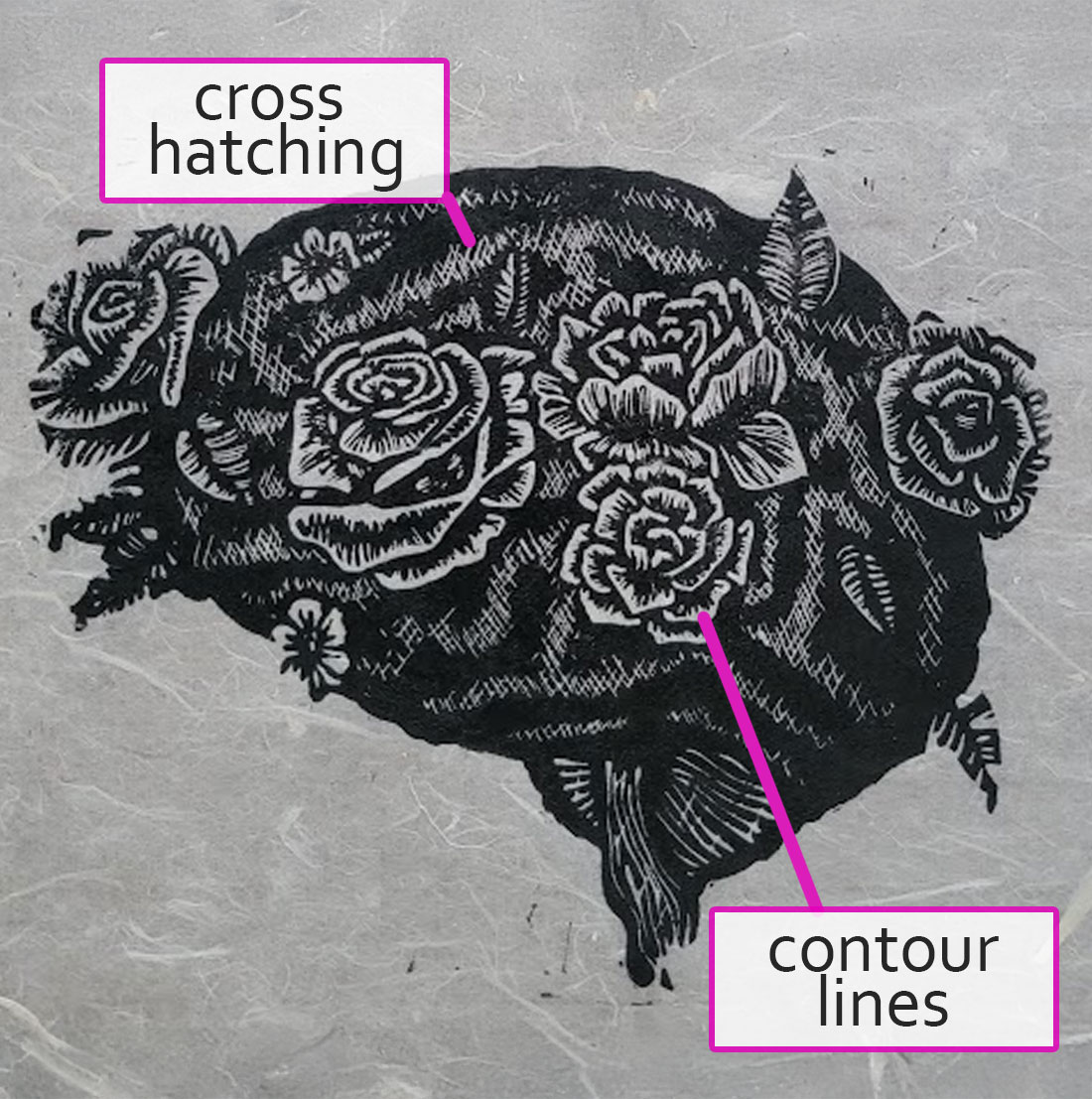
Cross Hatching
LAYERED, ILLUSTRATIVE
Layered interacting lines meeting at different angles
Used to to express darker & lighter areas, and builds depth through line density
Focuses on contrast rather than texture
02
Line-Based Technique
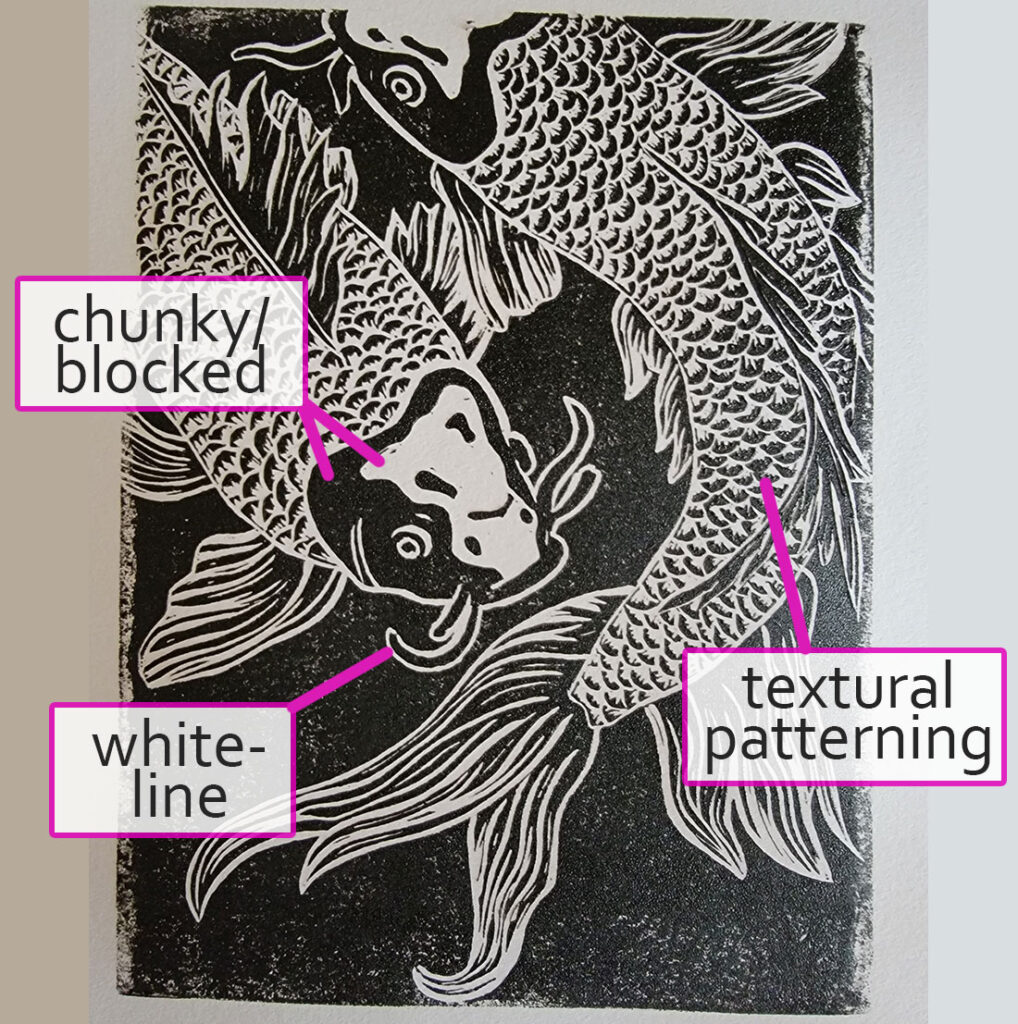
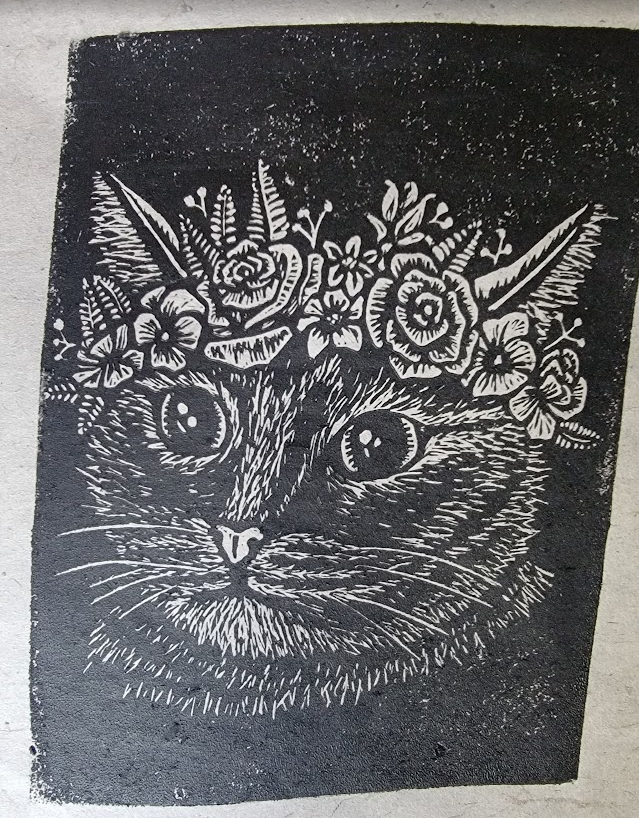
White-LIne
CRISP, HIGH-CONTRAST
Image is defined by carving lines into a black field, leaving negative space
Focuses on the weight and spacing of the lines
Creates contrast and form from negative space
03
Line-Based Technique
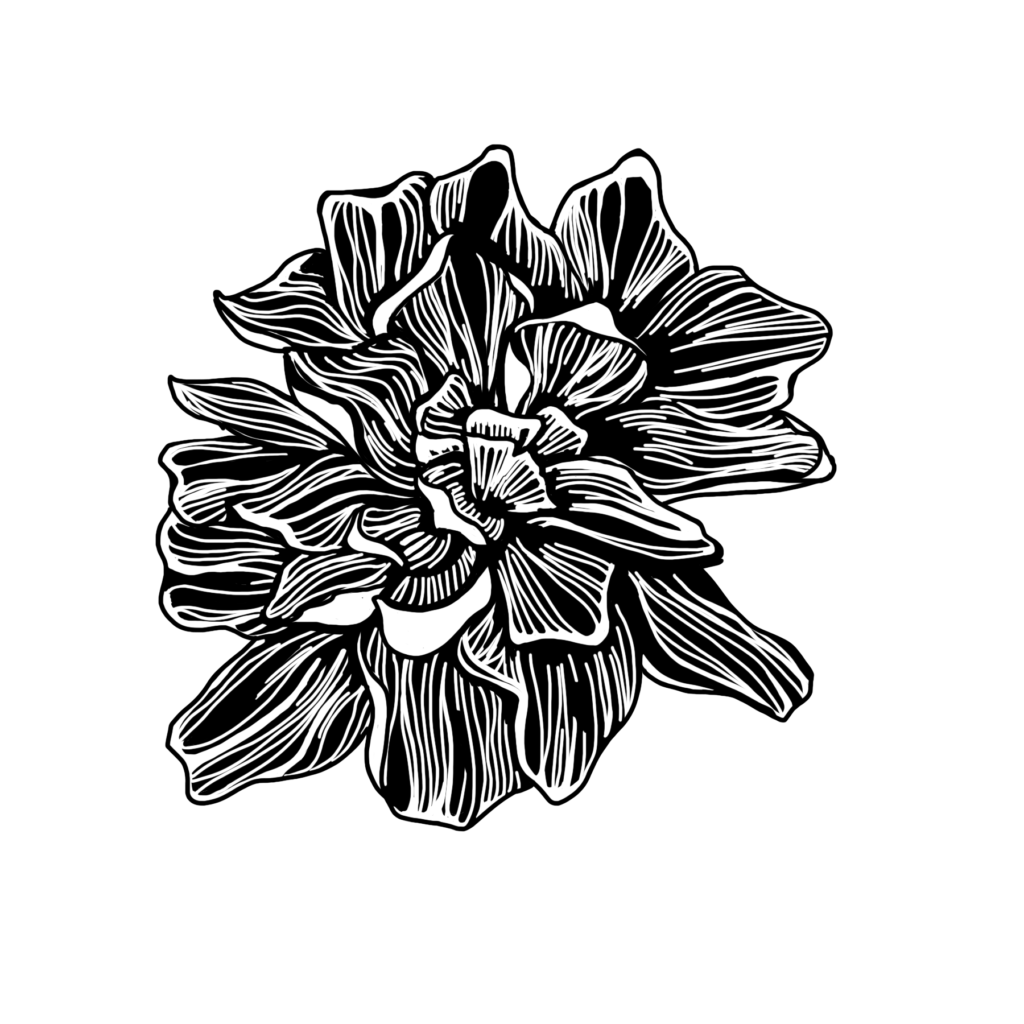
Parallel/Direction
STRUCTURED, CONTROLLED
Lines run parallel (or close to) in a dominant direction to imply shape and shading
Follows the curve or angle of the subject
Form is suggested without lines crossing
04
Line-Based Technique
Contour LINE
SCULPTURAL, DESCRIPTIVE
Objects defined with outlines that follow the form
Line direction describes volume and curvature
Depth can be created through spacing and flow
Can fill inner details with the same technique or another technique
Can be layered or minimal
Creates a bolder look
05
Line-Based Technique
directional hatching
DIMENSIONAL, TACTILE
Follows the form of the subject, reinforcing its structure
Directional strokes vary in length and/or density to suggest texture and depth
Effective for fur, hair, or foliage, creating movement and dimensionality through the line flow
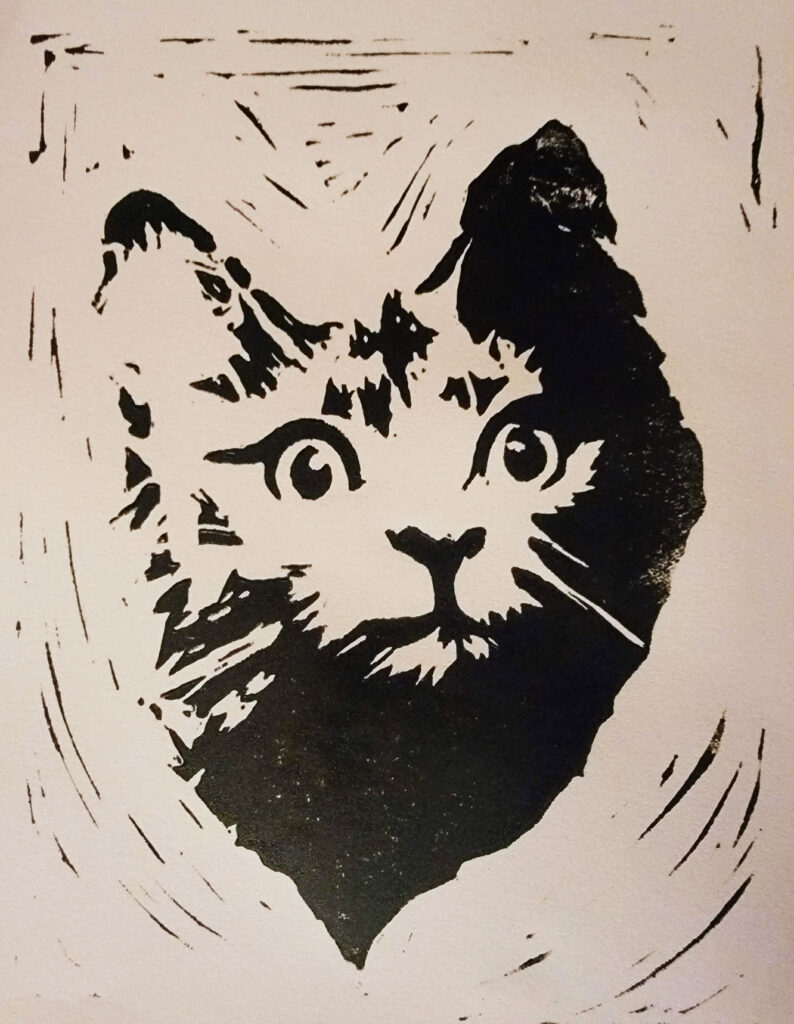
chunky/blocked
BOLD, GRAPHIC, HIGH-IMPACT
Large areas of positive and negative space, often with less carving
Creates silhouettes and focuses on bold contrast
Image is read through solid shapes rather than details
06
Shape-based technique
patterned fill
ORNAMENTAL, DECORATIVE
Adds rhythm, decorative over tonal
Achieved through some repitition
Fills negative space and can be used for shading
07
Shape-based technique
Multiple styles or a hybrid between can be combined in an art piece to create stylized or realistic pieces.