The art that I have purchased for myself over the years are always pieces that encompass a little bit of the artist’s soul. I have a handmade wind chime from a woman who thought she would never create again after a heart attack, and a bunny graffiti painting covered in swear words, sold by a man without a permit making a statement. I always envied how those artists were able to capture a bit of themselves, and this is where my inspiration for my sustainability project started.
Papermaking
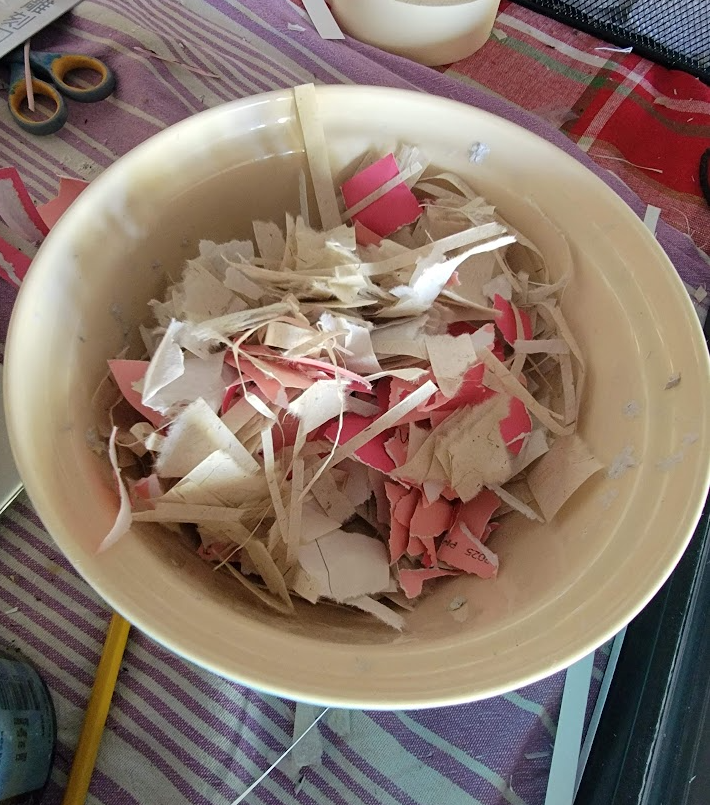
As a linocut artist, probably many can relate, there’s a sense of disappointment in the wastefulness when a print doesn’t turn out just right. What comes to mind is the cost of material and what could have been. I decided to start recycling my misfires, which also led to me pulverizing many things to turn into upcycled paper.
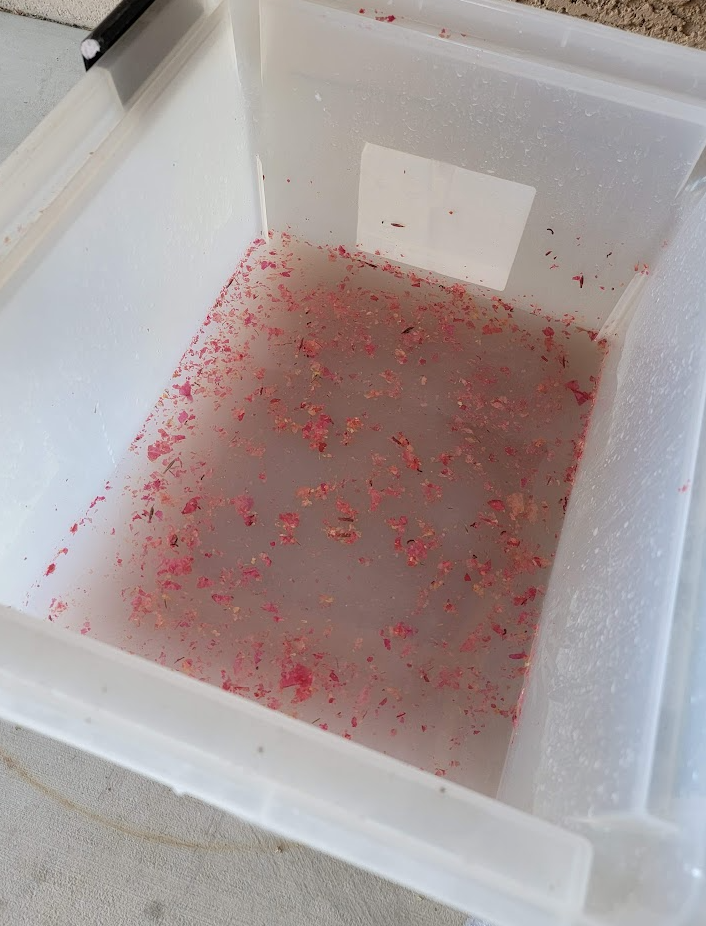
So I joined a papermaking community. Lots of papermakers know the necessity for a solid mold and deckle. I took apart some old canvases to steal their frames and used some window mesh to create my own, in my preferred size. My husband taught me how to use a staple gun to secure the screen to my frame. Before I knew it, I was pulverizing utility bills, asking my mother for her mail, upcycling medical bills, cotton balls, my plants, my friend’s plants, and creating paper out of anything I could get my hands on – creating truly unique pages.
For my final project, I used three sheets of paper – one out of birthday card envelopes, one from fallen bougainvillea petals, and a medical and utility bill sheet. All were mixed in with paper from shredded drawings that I no longer needed.
Printing onto handmade paper is also a challenge, as small ridges and grooves can throw off the ink. I found that drying my pages one at a time in the Arizona sun gives me a very flat and easy to work with page. Although I have the ability to make ultra-thin sheets, I found the importance of getting the right consistency so I could pull a good print off of them with my linoleum stamps.
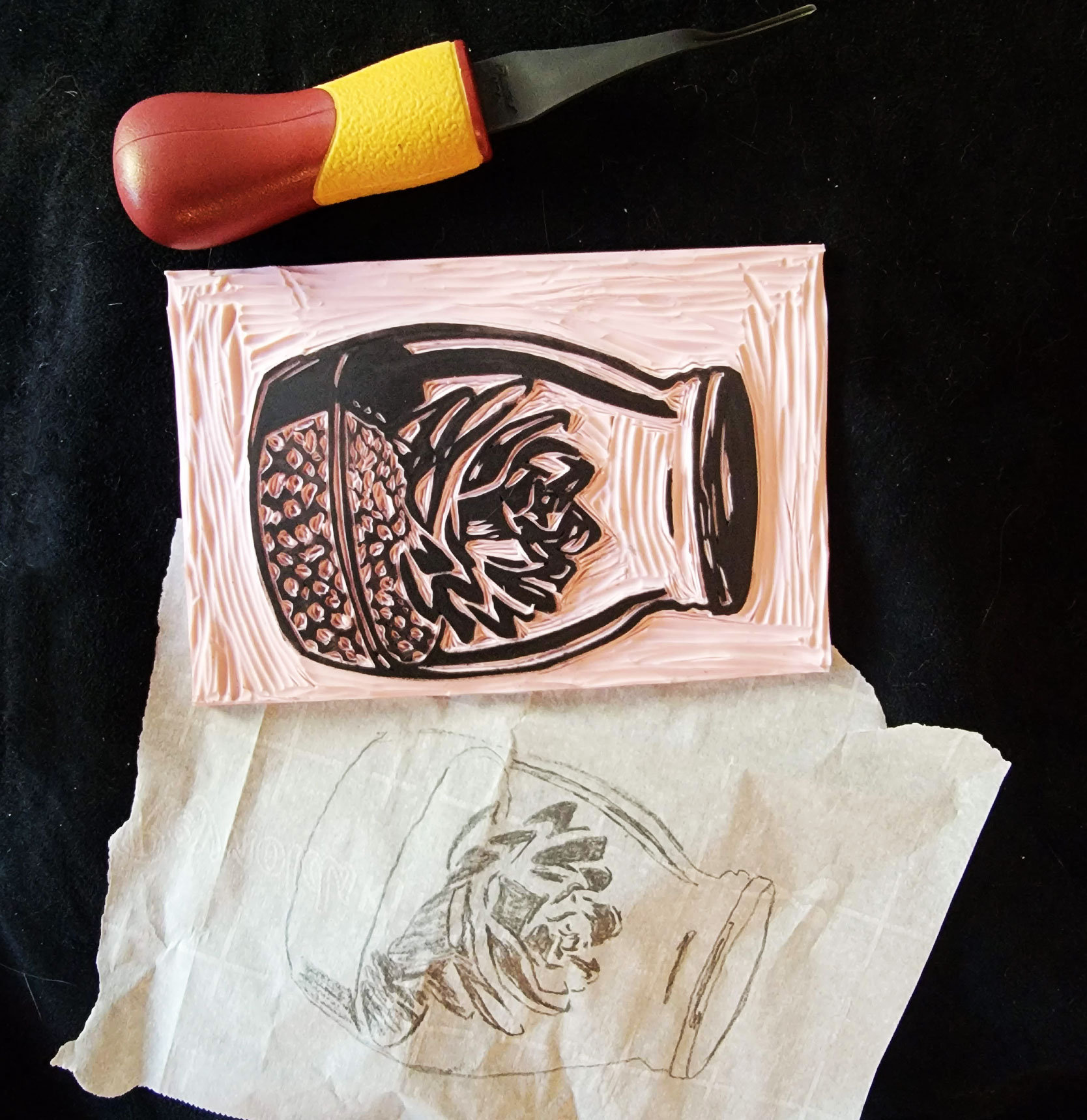
Linocutting
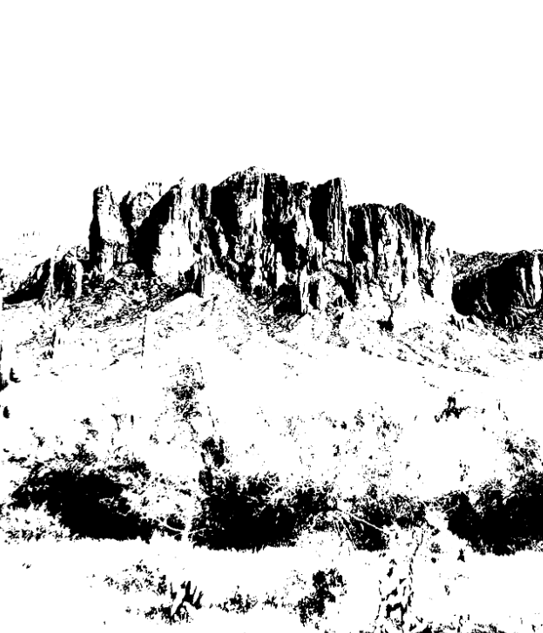
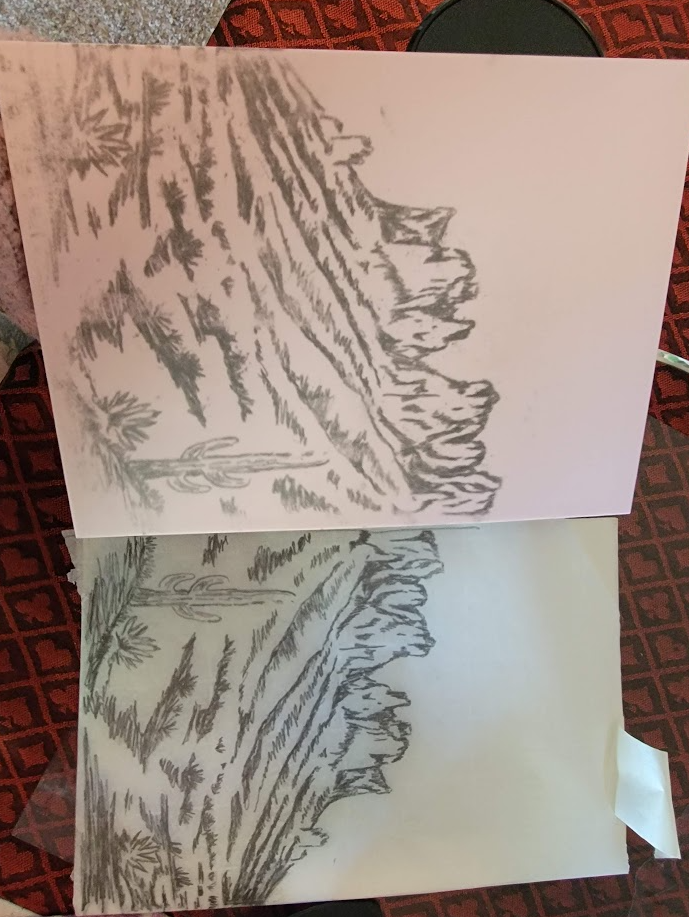
My linoleum stamps are all created as expected – slabs of linoleum hand-carved myself, with the inspiration coming from the desert around me. I took my own photographs of the scenes I recreated, and watched over videos from the places I had been to capture the sensation I had in the moment being there.
Sustainability in art
Making Inks
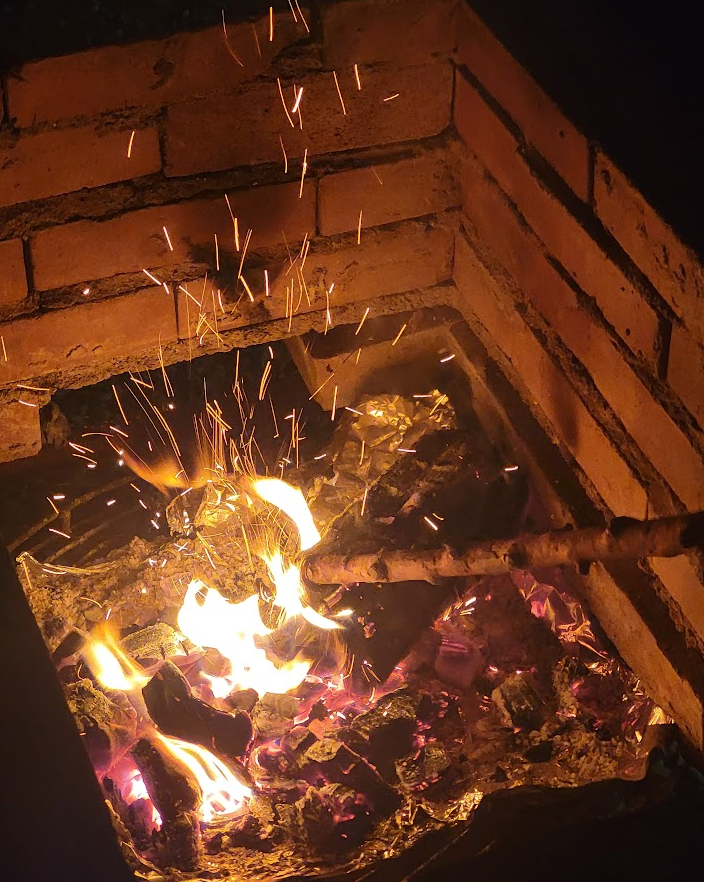
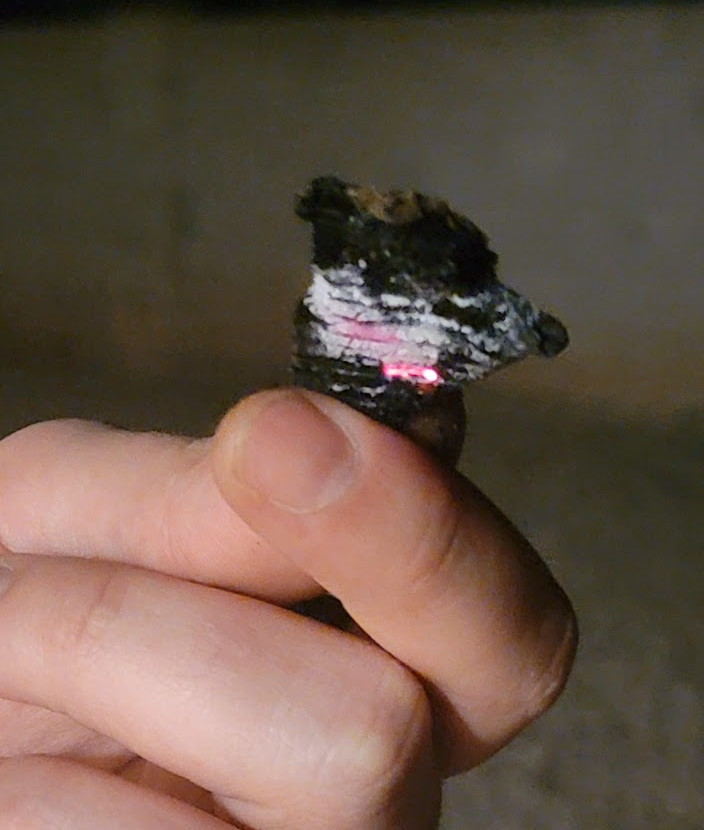
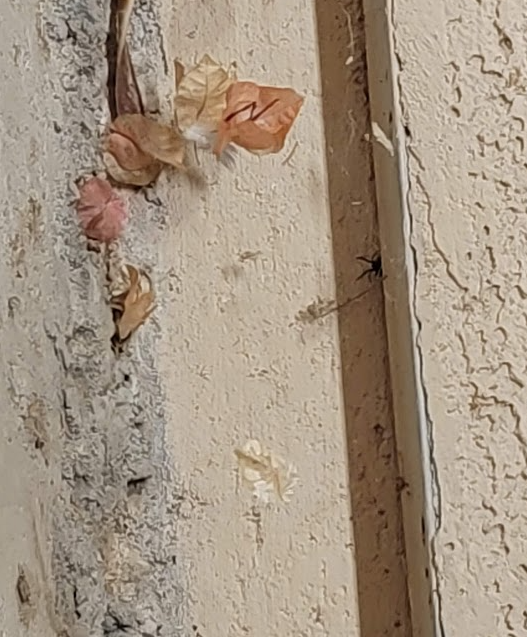
Next was the ink. As much as I loved my store-bought oil-based inks, I wanted something that would capture more of my experiences as an artist. I went on a venture with my husband to pick up logs, and we went to our friend’s house to light them on fire in a fire pit. Even this journey had challenges, including but not limited to a series of black widow spiders, working in the dark, and extinguishing and harvesting our charcoal through it all.
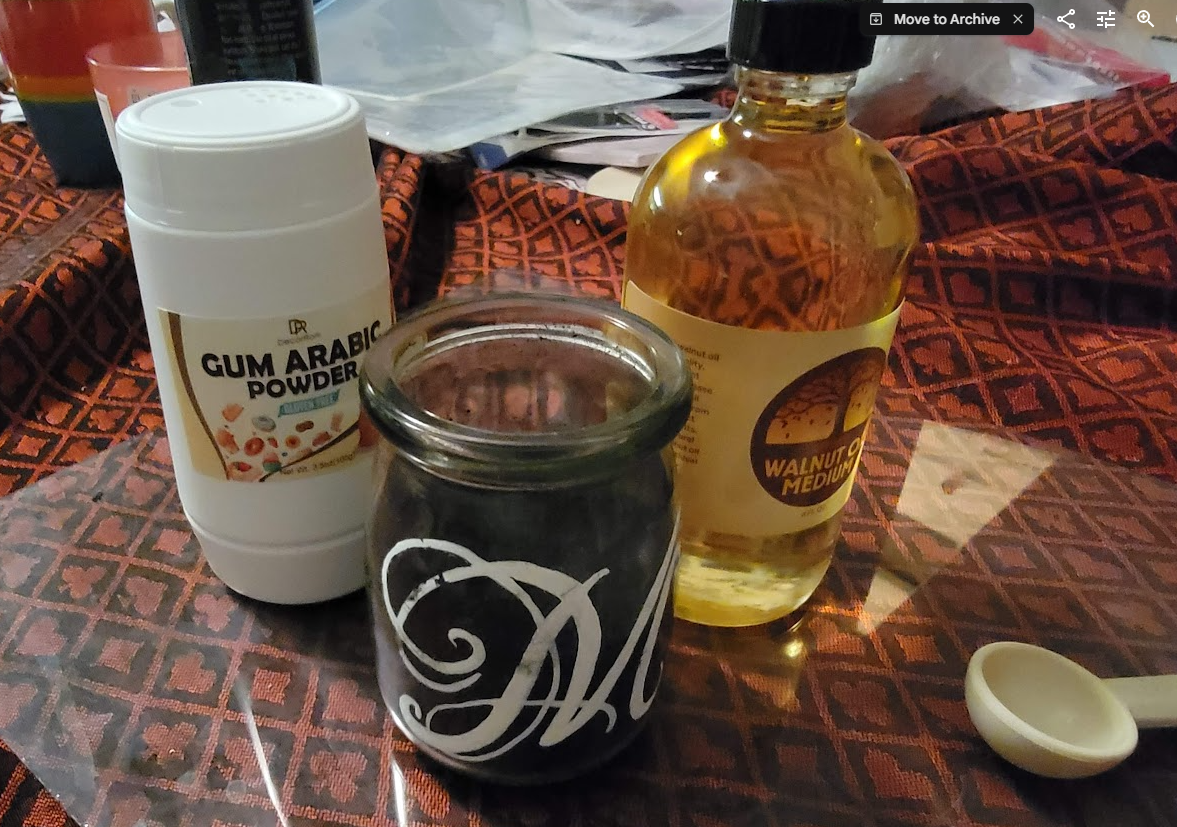
I brought back my coal and ground it down with a pestle and mortar. I made a mess, honestly. I had ingredients and options in front of me, but there was little to no documentation on hand-making printing ink online. As most linocutters would lean to, I researched oil-based ink first, although mine came out as nothing short of a flop. I tried water-based ink. It was way more in the direction I needed to go, so I looked up blogs and experiences of printing artists who have worked with it, finding very little, but learned enough about what to look for with my consistency.
I sat down for days and tried many different recipes, before finding what was actually working.
In case anyone else is curious, here’s the perfect mix:
Before you start, add a sealant coat to the linoleum. I used acrylic.
Ratio of 2 parts hot water to 1 part Arabic gum powder. Mix those together while warm.
Add in some charcoal, and a couple pinches of cornstarch and mix together.
Strain the ingredients. I used my paper-making mold to strain.
Do a thin coat of the handmade ink on the linoleum, and then add a second coat. The consistency is very thin and different with water-based ink, but no need to be alarmed (apparently)!
Work fast, as it will dry rather quickly.
Finished Product
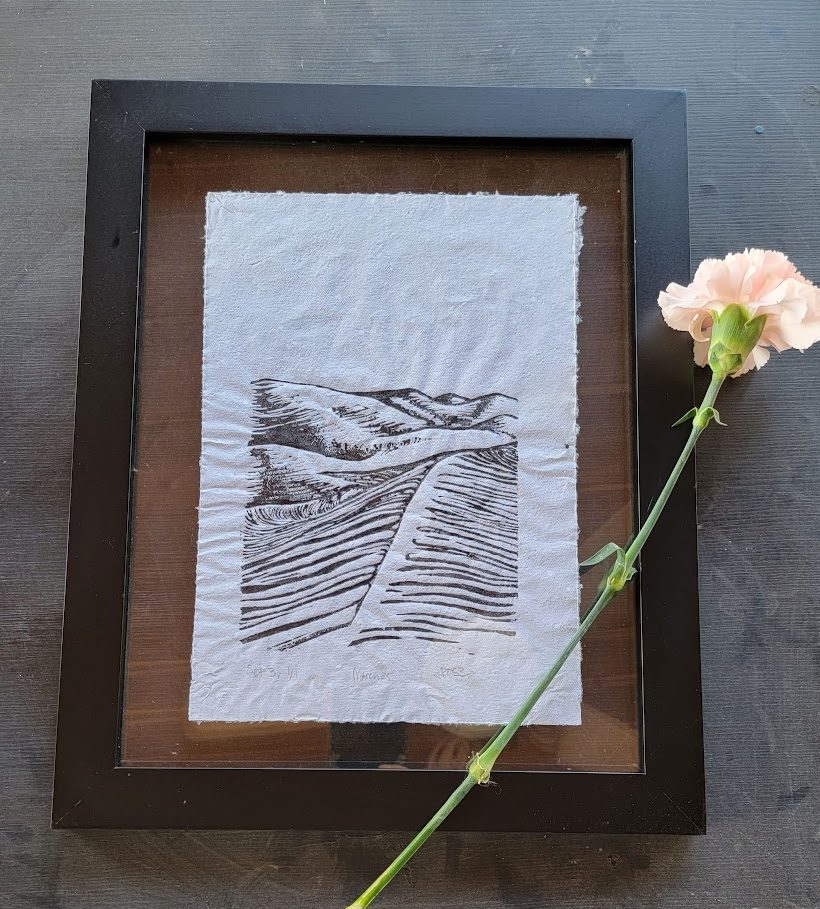
After dozens of failed prints, torn papers, and a mess of charcoal powder, these were my finished results. Three pieces that capture a little bit of my soul, experiences and learnings.